About Oceans2Earth

- O2E
- Oceans2Earth strives to assist with local solutions to global problems. O2E was founded in Melbourne, Australia in 2010 for the purpose of providing resources and financial assistance to animal welfare and conservation projects including elephant sanctuary land in Kenya, cat and dog rescue in Africa and community recycled product projects in Asia and Africa. The O2E Foundation aims to facilitate people’s awareness of the impacts of animal tourism, trade and human intervention on the welfare, sustainability and general health of wildlife populations.
Thursday, 15 March 2012


Do you know how your cheese is made?
PETA investigation reveals Agri-Mark cheese manufacturers of Cabot and McCadam brand cheeses uses torturous “techniques” on dairy cows
In late 2011 and early 2012, PETA conducted an undercover investigation at Adirondack Farms, LLC, a dairy factory farm that takes 180,000 pounds of milk—intended for their calves—from approximately 1,800 cows every day in Clinton County, New York. Adirondack Farms sends that milk to Massachusetts-based Agri-Mark, Inc., the self-proclaimed "largest supplier of farm fresh milk in New England." Agri-Mark makes Cabot and McCadam cheeses and had $900 million in 2011 sales.

During the course of the investigation, PETA's investigator found that workers routinely jabbed and struck cows with a pole and cane—on the face, udder, and hindquarters—when leading them into a room to be milked. When PETA's investigator brought these abuses to the attention of a farm manager, the manager admitted that the workers "get carried away with" striking cows.
This same manager—who failed to stop the abuse—was caught on video by PETA's investigator electro-shocking a cow in the face repeatedly. He also jabbed a fully conscious downed cow, whom he called a "dumb bitch," in the ribs with a screwdriver and used a small vehicle to drag her approximately 25 feet.
Some cows with bloody vaginal prolapses that became covered with pus and manure were left to suffer, untreated, for almost three months. A manager told PETA's investigator that the farm did nothing for cows in this condition.
There was no shortage of animal suffering as a result of the dairy industry's cruel standard procedures. With no pain relief whatsoever, calves' horn buds were burned off so as to stop their horns from growing. PETA's undercover footage shows one of the millions of young calves who undergo this mutilation every year in the U.S. as she thrashes about in agony, smoke rising from her seared flesh. Workers used "guillotine cutters" to "lop off" the horns of older animals—again without anaesthetics or pain relief. PETA's undercover investigator also recorded a manager as he put his arm deep inside a cow's rectum to "rake" faeces out before artificially inseminating her with a "gun," another standard practice on dairy factory farms.
In order to make milking easier, calves' tails were docked by tightly binding them with elastic bands. This causes the skin and tissue to rot and die, eventually sloughing off. Not having a tail deprives animals of the fundamental ability to swat away flies and causes them acute and chronic pain.
To increase milk production, workers injected cows every two weeks with bovine somatotropin (BST, a.k.a., bovine growth hormone, or BGH), which contributes to mastitis, a painful inflammation of the udder for which cows tested positive virtually daily at the farm. And as at every dairy farm, calves were torn away from their mothers—who are known for their maternal instincts and whose pregnancies last for nine months, just like human pregnancies—almost immediately after birth, causing both mother and calf extreme distress.
PETA has notified Adirondack Farms' owners of the behaviour of the managers and workers responsible for the abuse and neglect and asked that they take appropriate disciplinary action—including termination—as well as notifying all managers and employees that no form of cruelty will be tolerated.
Oceans2Earth a not for profit organisation has also taken an initiative of looking into animal issue by providing volunteering services in Australia for the purpose of animal conservation.
WHAT CAN YOU DO
Please go to the PETA site link here and send a quick e-mail to Agri-Mark CEO Dr. Richard Stammer and politely urge him to implement PETA's recommendations immediately to help end the most egregious abuses of cows on cooperative members' farms and to improve the animals' welfare.
Also, you may want to consider to go vegan now.
In late 2011 and early 2012, PETA conducted an undercover investigation at Adirondack Farms, LLC, a dairy factory farm that takes 180,000 pounds of milk—intended for their calves—from approximately 1,800 cows every day in Clinton County, New York. Adirondack Farms sends that milk to Massachusetts-based Agri-Mark, Inc., the self-proclaimed "largest supplier of farm fresh milk in New England." Agri-Mark makes Cabot and McCadam cheeses and had $900 million in 2011 sales.

During the course of the investigation, PETA's investigator found that workers routinely jabbed and struck cows with a pole and cane—on the face, udder, and hindquarters—when leading them into a room to be milked. When PETA's investigator brought these abuses to the attention of a farm manager, the manager admitted that the workers "get carried away with" striking cows.
This same manager—who failed to stop the abuse—was caught on video by PETA's investigator electro-shocking a cow in the face repeatedly. He also jabbed a fully conscious downed cow, whom he called a "dumb bitch," in the ribs with a screwdriver and used a small vehicle to drag her approximately 25 feet.
Some cows with bloody vaginal prolapses that became covered with pus and manure were left to suffer, untreated, for almost three months. A manager told PETA's investigator that the farm did nothing for cows in this condition.
There was no shortage of animal suffering as a result of the dairy industry's cruel standard procedures. With no pain relief whatsoever, calves' horn buds were burned off so as to stop their horns from growing. PETA's undercover footage shows one of the millions of young calves who undergo this mutilation every year in the U.S. as she thrashes about in agony, smoke rising from her seared flesh. Workers used "guillotine cutters" to "lop off" the horns of older animals—again without anaesthetics or pain relief. PETA's undercover investigator also recorded a manager as he put his arm deep inside a cow's rectum to "rake" faeces out before artificially inseminating her with a "gun," another standard practice on dairy factory farms.
In order to make milking easier, calves' tails were docked by tightly binding them with elastic bands. This causes the skin and tissue to rot and die, eventually sloughing off. Not having a tail deprives animals of the fundamental ability to swat away flies and causes them acute and chronic pain.
To increase milk production, workers injected cows every two weeks with bovine somatotropin (BST, a.k.a., bovine growth hormone, or BGH), which contributes to mastitis, a painful inflammation of the udder for which cows tested positive virtually daily at the farm. And as at every dairy farm, calves were torn away from their mothers—who are known for their maternal instincts and whose pregnancies last for nine months, just like human pregnancies—almost immediately after birth, causing both mother and calf extreme distress.
PETA has notified Adirondack Farms' owners of the behaviour of the managers and workers responsible for the abuse and neglect and asked that they take appropriate disciplinary action—including termination—as well as notifying all managers and employees that no form of cruelty will be tolerated.
Oceans2Earth a not for profit organisation has also taken an initiative of looking into animal issue by providing volunteering services in Australia for the purpose of animal conservation.
WHAT CAN YOU DO
Please go to the PETA site link here and send a quick e-mail to Agri-Mark CEO Dr. Richard Stammer and politely urge him to implement PETA's recommendations immediately to help end the most egregious abuses of cows on cooperative members' farms and to improve the animals' welfare.
Also, you may want to consider to go vegan now.
This article was reproduced courtesy of PETA
Tuesday, 28 February 2012
DAY 13 - Where are the missing?


On this day - the 13th day since their abduction
What has happened to the original MISSING 13?
Previously abused, mistreated and discarded, these animals have found care, love and sanctuary at the Wildlife Friends Foundation of Thailand (www.wfft.org).
In retaliation for the allegations by WFFT Foundation and other Wildlife Rescue organisations, the Department of National Parks (DNP) raided the WFFT Rescue Centre with 70 armed men and removed 103 animals from the Centre. This was without legal cause. They kidnapped the first 13 animals from the Centre on the 15th and 16th February, 2012 and took them away under armed guard.
For more than 8 days the DNP camped outside the Centre in an attempt to intimidate and harass the staff and international volunteers trapped inside before taking the other 90.
They are suffering for a second time in their lives now.
Somewhere away from home.
Without care and medical treatment.
PLEASE TAKE A MOMENT
SEND ALL YOUR GOOD THOUGHTS OUT TO ALL THOSE STILL MISSING FROM HOME
http://www.thepetitionsite.com/2/urgent-plea-for-rescued-thai-wildlife/
On 27th February, 3 civets; Charlie, Bangbon and Ayut, were returned to WFFT. It’s a start but we have a long way to go.
Charlie – bushmeat victim

Masked Palm Civet (Paguma larvata)
|
Date Confiscated – 15/2/2012
Current Location – HOME SAFE AT WFFT |
Bangbon – mistreated and illegal pet

Common Palm Civets (Paradoxurus hermaphroditus)
| Date Confiscated – 15/2/2012 Current Location – HOME SAFE AT WFFT |
Ayut – mistreated and illegal pet

Common Palm Civets (Paradoxurus hermaphroditus)
|
Date Confiscated – 15/2/2012
Current Location - HOME SAFE AT WFFT |
Sandee – poaching victim

Binturong (Arctictis binturong)
|
Date Confiscated – 15/2/2012
Current Location – Government Zoo/Breeding Centre |
George – abusive caging at temple

Northern Pig-Tailed Macaque (Macaca leonina)
|
Date Confiscated – 15/2/2012
Current Location – Government Zoo/Breeding Centre |
Smokey – abusively kept caged at temple

Northern Pig-Tailed Macaque (Macaca leonina)
|
Date Confiscated – 15/2/2012
Current Location – Unknown |
Lila – abusively kept caged at temple

Northern Pig- Tailed Macaque (Macaca leonina)
|
Date Confiscated – 16/2/2012
Current Location – Unknown |
Tamairuak – chained and kept as illegal pet

Northern Pig-Tailed Macaque (Macaca leonina)
|
Date Confiscated – 16/2/2012
Current Location – Unknown |
Bertie – vehicle hit and run victim

Long-Tailed Macaque (Macaca fascicularis)
|
Date Confiscated – 15/2/2012
Current Location – Government Zoo/Breeding Centre |
Jaw – coconut monkey then dumped, found in chains

Northern Pig-Tailed Macaque (Macaca leonina)
|
Date Confiscated – 16/2/2012
Current Location – Unknown |
Oo an– illegal pet

Long-Tailed Macaque (Macaca fascicularis)
|
Date Confiscated – 15/2/2012
Current Location – Government Zoo/Breeding Centre |
Sparticus – gun shoot, hit and run, dog attack victim as well as electrocuted

Long-Tailed Macaque (Macaca fascicularis)
|
Date Confiscated – 16/2/2012
Current Location – Unknown |
Jeud – coconut monkey, ingrown neck chain

Northern Pig-Tailed Macaque (Macaca leonina)
|
Date Confiscated – 15/2/2012
Current Location – Government Zoo/Breeding Centre |
or
Facebook Wildlife Friends Foundation of Thailand
Monday, 27 February 2012
Oceans2Earth goes to the circus
The circus is in town in Melbourne, Australia. Oceans2Earth volunteers headed to Stardust Circus to join forces with other animal welfare activists to peacefully protest against the inclusion of animals in this entertainment program.
The circus includes lions, monkeys, horses, ponies and dogs. Stardust stubbornly remains one of the last circuses in Australia to keep animals on the bill for the entertainment of kids.
Interesting for me was the feedback from punters heading in to buy tickets, keen to find a distraction to keep the kids out of their hair for the day. Check this...
"I didn't know they had animals. That's unusual"
"I know they shouldn't do it but I haven't seen animals for ages so its cool"
"Give me that flyer. My daughter needs to read this. She does't get how wrong it is"
"No son, no animal should be kept in cages all the time"
"Have you ever trained an animal? You train with kindness so this isn't cruel".
Here's the images taken by Thomas King and Tray Leske on the day. Thanks guys
The Stardust circus is doing the Melbourne rounds in February and March 2012.
WHAT CAN YOU DO?
Talk to your kids if you have them. Explain the situation. LIVE the concept that animals are wild.
Come down to Cranbourne on 3rd March at 3pm and hand out some flyers. Email or FB O2E if you need directions.
Joni the Facebook event page for the protest on the 3rd. See you there!
 |
| Stardust rates the performing animals as the lynchpin of their circus. |
The circus includes lions, monkeys, horses, ponies and dogs. Stardust stubbornly remains one of the last circuses in Australia to keep animals on the bill for the entertainment of kids.
Interesting for me was the feedback from punters heading in to buy tickets, keen to find a distraction to keep the kids out of their hair for the day. Check this...
"I didn't know they had animals. That's unusual"
"I know they shouldn't do it but I haven't seen animals for ages so its cool"
"Give me that flyer. My daughter needs to read this. She does't get how wrong it is"
"No son, no animal should be kept in cages all the time"
"Have you ever trained an animal? You train with kindness so this isn't cruel".
Here's the images taken by Thomas King and Tray Leske on the day. Thanks guys
The Stardust circus is doing the Melbourne rounds in February and March 2012.
WHAT CAN YOU DO?
Talk to your kids if you have them. Explain the situation. LIVE the concept that animals are wild.
Come down to Cranbourne on 3rd March at 3pm and hand out some flyers. Email or FB O2E if you need directions.
Joni the Facebook event page for the protest on the 3rd. See you there!
Published with Blogger-droid v2.0.4
Sunday, 26 February 2012
United States' labs source research animals from pound
 |
| Tiger RIP (pic from PETA) |
It seems that labs were going to the homeless cats and dogs’ home and buying cats to use in research!
The story of Tiger – or as the University of Michigan's Survival Flight training program called him “E8269” – is heartbreaking.
Fortunately PETA’s campaigning has caused labs to stop this practice…with cats.
Pigs are not so fortunate.
This story is reprinted from PETA’s laboratory campaign article.
“Tiger's intake report showed that he was a healthy, friendly cat when he entered a University of Michigan (U-M) laboratory. Five days later, Tiger was dead.
While Tiger's name before he was taken to the laboratory may never be known, once there he was treated as little more than a label, a cat known as "E8269." Given his stripes, we're honoring this handsome cat with a name more befitting him, Tiger.
Like the cats many of us share our homes with, he probably enjoyed being scratched behind the ears and purred when he saw his food dish. But U-M officials certainly didn't care about Tiger's likes and dislikes when they tossed him into their intubation training lab—a grim laboratory in which cats had plastic tubes forced down their windpipes—and then killed him.
PETA exposed the abuse of animals in the University of Michigan's Survival Flight training program. We showed that university officials misled the public when they said that all the cats in their labs—healthy, lovable cats like Tiger—were adopted after they endured hideous procedures in the course. In fact, records show that more than half of the cats used in recent years were quietly killed.
PETA's exposé and vigorous campaigning caused a public uproar. Unable to ignore our fury, U-M announced that it had ended its use of cats in its laboratories—a wonderful victory for cats!
The cats have been replaced with modern, effective simulators. But U-M plans to continue to harm and kill pigs for other procedures in this training course.
That means that gentle, intelligent pigs will have holes cut in their throats and chests and needles jammed into the tissue surrounding their hearts and will ultimately be killed just as cats like Tiger were. Pigs continue to suffer at U-M, and millions of other animals are suffering right now in cruel chemical, drug, food, and cosmetics tests, biology lessons and training exercises, and horrible experiments." PETA, 2012
WHAT YOU CAN DO
Make a donation to help PETA fight for the replacement of pigs at U-M with simulators and support all our lifesaving efforts to expose and stop cruelty in university laboratories or wherever it occurs
Speak out in your local areas about the use of animals in research. With the technology of today, there is NO NEED. EVER.
Be careful and do your research when you buy cosmetics and other products that may have been tested on animals. The company may use third party testing companies so don't be too trusting! For example, Avon and Estee Lauder have stated that they do no test on animals, however they do contract a Chinese company to do that for them. Sneaky sneaky Avon. Boycott these companies and make it know to your friends and family that you do and why.
Sunday, 19 February 2012
The attempt to silence the truth
For most, their lives started with trauma, others suffering injury and harm from accidents or human conflict. All of the wildlife at Wildlife Friends Foundation of Thailand (WFFT) finding sanctuary and safety in the care of the full time staff and international volunteers at the rescue centre near Phetchaburi, Thailand.

The country undeniably has a checkered history - and present, when it comes to the treatment of animals. Just taking a look through facebook and tripadvisor demonstrates that for many overseas holiday makers, a ride on an elephant or a photo with a monkey dressed in dolls' clothes in the street or nightclub is a memorable highlight of their trip. The trade corridor from Thailand to China provides opportunity for collectors and natural medicine enthusiastics to procure exotic specimens at cheap prices, no questions asked.
The entertainment of our human race is a lucrative business the world over. One which sees the prevalence of NGOs in animal welfare and conservation adding their voice in an attempt to stem the tide of the mistreated, uninformed, malnourished and all out mutilation of our planet's biodiversity.

My sister and I found WFFT online a couple of years ago and have volunteered there twice now. The devastating flood of 2010 ripped apart many of the enclosures at the centre and washed out the volunteer housing. It was going to be a hard road back. In 2011 I was amazed at how much had been achieved. The animal enclosures were vastly improved, the enrichment programs advanced and all the wildlife residents were healthy and well feed. It seemed that adversity just set the resolve of WFFT to fight and work harder for those animals who relied on the care and protection of staff and volunteers.
In 2011 I spent some time with WFFT Founder Edwin Wiek looking over the new enclosures and plans for the developing areas of the centre. It was amazing how big the place was becoming. Actually sad that so much space was needed and that so many animals were in need. Edwin wandered (quickly and with purpose as he always does) pointing out plans for this space and that. All the while taking time to chat to the animals we passed. Edwin knows them all by name. All 450 of them. He can tell you when and how each one came to the centre. Some particularly hold a very dear place in his heart; Meow the tiger, rescued from chains at a petrol station, now forever tormented by a moto- neurological condition creating epileptic-like fits, or Jojo the primate with such psychological trauma that he can not control his reflexes. Jojo adores Edwin, and he Jojo, so much so that on the rare occasion Edwin gets some downtime, the two of them can be found in a hammock reading a book and grooming as primates do.
It was during this visit in December 2011 that the centre lost a second elephant in as many months. I had spent a couple of the few days Joan had spent at the centre after her release (for payment) from an elephant camp, trying to care for her, along with fellow volunteer Rene (O2E phlogs on Joan here and here). It wasn't any use, she was too sick and died. Given up for money after her owners realised she couldn't carry or entertain the tourists anymore. The owners told a story with half truths and promise and handed over the 60 year old to spend her remaining days in retirement. None of us were to know her days were to be so few. Joan's story is a sad one and so common in Thailand. She was a lovely lady, quite partial to bumping us females just so we knew she was there. She had her first swim, her first juicy pineapple, her first affection at WFFT. She held on for a few days revelling in this new found joy until the illness that had gripped her won.

We were devastated. Edwin particularly so. The frustration, the disgust we all felt, he gathered up around him and set himself firmly to fight. With 22 years experience in life in Thailand, Edwin knows the place and the people well. He is outspoken and is known to be so. Many quotes come to mind from famous and infamous people in history that were suited to the situation at hand. Ralph Waldo Emerson, 17th century poet and individualist said “Our lives begin to end the day we become silent about things that matter”. Edwin told me that day Joan died that he had been writing about the elephant trade. It was time to release his thoughts to the media. For Joan and every other tortured living creature in Thailand and the world over.
So we buried Joan that day and life at the centre continued, set in its resolve that we would care and protect those we could and remember Joan and everything she stood for. Pragmatically aware that Joan is one of many and the list of wildlife that needed saving was growing by the day. I waited. Anxious for the day Edwin's words would be released.
I didn't have to wait long. As it happened, several events hit the news back to back. Poachers in the national park, runaway "tamed" bull elephant...it seemed Thailand was determined to place their wildlife trade issues right out there for all to see. Edwin and WFFT made comment, releasing articles and opinions on these recent, tragic events. The air is ripe for change. And as in anything in life, some don't like change. They stamp their feet, they argue, they sabotage, they fight back.

Coinciding with this, was the international conference on tiger crime, hosted by the International Consortium on Combating Wildlife Crime (ICCWC), attended by such global enterprises as CITES and INTERPOL.Bangkok was the host. All the international major stakeholders were in town for two days. By all media generated accounts, it was a huge success. The outcome - a signing of mandates and conventions detailing the parties commitment to eradicating tiger crime. It's all very high level UN type stuff; "we condemn this, we support that, we are committed..." Edwin was interviewed several times and again made comment highlighting the overarching issues of corruption and governmental restrictions.
On the 13th February 2012, the Wildlife Friends Foundation of Thailand and a northern elephant rescue park, Elephant Nature Park were raided by the Department of National Parks (DNP). Demands for ownership papers for all of the 450 animals at WFFT were made. The timeframe to produce. 2 hours. Edwin's wife Noi (Jansaeng Sangnanork) was arrested and escorted to the police station by 30 armed officers. The siege on WFFT and Edwin Wiek had begun.

The heartbreaking story is well documented through Facebook and Twitter. You can read for yourselves, if you haven't already, how those days panned out. The threats, harassment and abusive handling of animals confiscated is evident as you read and watch the images (www.wix.com/anoelle45/wffthelp is a great site by a volunteer that gathers resources and information from around the world on the raid).

After just 5 days the social media was reaching an audience of 381,200 tweeters, about 20,000 facebookers and 16,064 signatures on the petition site . The exposure was monumentuous. The support for those on the ground was overwhelming. Support from organisations such as Care for the Wild, Animals Australia, Bornfree Foundation and WWF flooded in, tapping in to their readership.

After threats of 103 confiscations the 70 armed DNP officers have taken 13 animals in 6 days. They camp outside the centre at night and show their presence, always that constant threatening promise that come daylight, they will be back inside to confiscate more. That's an incredible show of force, an intriguingly massive number of manpower for the 6 day (and counting) operation. Imagine what could be achieved with that resource? The DNP official 'S' still at large, wanted in connection with elephant poaching, for example...just saying...

Whilst things are quieter at the centre the past two days, with no confiscations pending discussions between WFFT legal representation and the DNP, the officials wait and the staff and volunteers also wait. Meanwhile there are 13 scared and lonely animals somewhere in a zoo in Thailand away from their home at the centre, being traumatised all over again.

We all wonder when will they be returned? It seems that with the paperwork all in order for WFFT's legal ownership of all wildlife at the centre, the DNP have no legal grounds to continue this charade, and yet even today more threats from officials that come Monday the reprisals will continue.

For all of those who have spent time at WFFT, the centre has changed our lives. My sister and I started Oceans2Earth Foundation in 2010 after volunteering there. We only hope the impact we can make in future years will compare to that of Wildlife Friends Foundation of Thailand, Edwin Wiek, Lucy Clark (Vet), Tommy Taylor (Volunteer Co-ordinator), Laurene Heuguerot and everyone involved with WFFT.
Our voices are with yours. Our thoughts and hopes too that this will be over soon. Edwin has published a letter which raises the very questions we have all been asking as we watch the seige unfold. Please have a read.

WHAT CAN YOU DO?
You CAN make a difference. The supporters of WFFT have reached thousands of people, media and organisations and the story is out there for the international scrutiny it deserves.
Please go to http://www.thepetitionsite.com/2/urgent-plea-for-rescued-thai-wildlife/ and sign the petition
Check out and follow @Edwinwiek and @Lucywildlife on Twitter (all captions in this blog are taken directly from Edwin or Lucy's twitter feed)
Join Wildlife Friends Foundation of Thailand Facebook page
Go to www.wix.com/anoelle45/wffthelp for video and pics, news stories on the raid. Click the Resources link for contact details of every organisation you can write to. There's even a letter template if you need it. Contact as many people as you can. If you know of any other organisation that might help, contact them and post their contact details on Facebook.
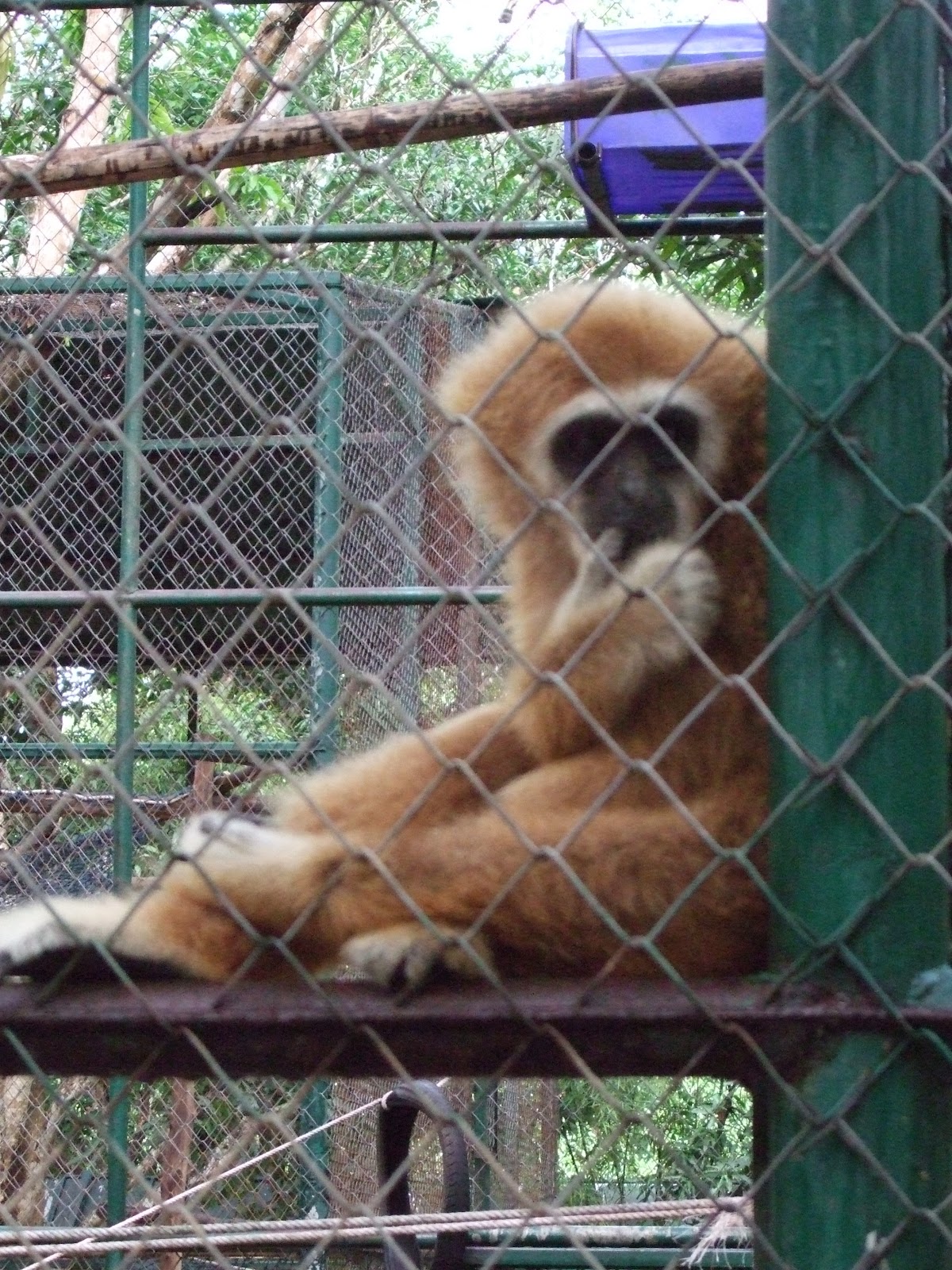
The country undeniably has a checkered history - and present, when it comes to the treatment of animals. Just taking a look through facebook and tripadvisor demonstrates that for many overseas holiday makers, a ride on an elephant or a photo with a monkey dressed in dolls' clothes in the street or nightclub is a memorable highlight of their trip. The trade corridor from Thailand to China provides opportunity for collectors and natural medicine enthusiastics to procure exotic specimens at cheap prices, no questions asked.
The entertainment of our human race is a lucrative business the world over. One which sees the prevalence of NGOs in animal welfare and conservation adding their voice in an attempt to stem the tide of the mistreated, uninformed, malnourished and all out mutilation of our planet's biodiversity.

My sister and I found WFFT online a couple of years ago and have volunteered there twice now. The devastating flood of 2010 ripped apart many of the enclosures at the centre and washed out the volunteer housing. It was going to be a hard road back. In 2011 I was amazed at how much had been achieved. The animal enclosures were vastly improved, the enrichment programs advanced and all the wildlife residents were healthy and well feed. It seemed that adversity just set the resolve of WFFT to fight and work harder for those animals who relied on the care and protection of staff and volunteers.
In 2011 I spent some time with WFFT Founder Edwin Wiek looking over the new enclosures and plans for the developing areas of the centre. It was amazing how big the place was becoming. Actually sad that so much space was needed and that so many animals were in need. Edwin wandered (quickly and with purpose as he always does) pointing out plans for this space and that. All the while taking time to chat to the animals we passed. Edwin knows them all by name. All 450 of them. He can tell you when and how each one came to the centre. Some particularly hold a very dear place in his heart; Meow the tiger, rescued from chains at a petrol station, now forever tormented by a moto- neurological condition creating epileptic-like fits, or Jojo the primate with such psychological trauma that he can not control his reflexes. Jojo adores Edwin, and he Jojo, so much so that on the rare occasion Edwin gets some downtime, the two of them can be found in a hammock reading a book and grooming as primates do.
 |
| Jojo with Edwin Wiek at WFFT |
It was during this visit in December 2011 that the centre lost a second elephant in as many months. I had spent a couple of the few days Joan had spent at the centre after her release (for payment) from an elephant camp, trying to care for her, along with fellow volunteer Rene (O2E phlogs on Joan here and here). It wasn't any use, she was too sick and died. Given up for money after her owners realised she couldn't carry or entertain the tourists anymore. The owners told a story with half truths and promise and handed over the 60 year old to spend her remaining days in retirement. None of us were to know her days were to be so few. Joan's story is a sad one and so common in Thailand. She was a lovely lady, quite partial to bumping us females just so we knew she was there. She had her first swim, her first juicy pineapple, her first affection at WFFT. She held on for a few days revelling in this new found joy until the illness that had gripped her won.
We were devastated. Edwin particularly so. The frustration, the disgust we all felt, he gathered up around him and set himself firmly to fight. With 22 years experience in life in Thailand, Edwin knows the place and the people well. He is outspoken and is known to be so. Many quotes come to mind from famous and infamous people in history that were suited to the situation at hand. Ralph Waldo Emerson, 17th century poet and individualist said “Our lives begin to end the day we become silent about things that matter”. Edwin told me that day Joan died that he had been writing about the elephant trade. It was time to release his thoughts to the media. For Joan and every other tortured living creature in Thailand and the world over.
So we buried Joan that day and life at the centre continued, set in its resolve that we would care and protect those we could and remember Joan and everything she stood for. Pragmatically aware that Joan is one of many and the list of wildlife that needed saving was growing by the day. I waited. Anxious for the day Edwin's words would be released.
I didn't have to wait long. As it happened, several events hit the news back to back. Poachers in the national park, runaway "tamed" bull elephant...it seemed Thailand was determined to place their wildlife trade issues right out there for all to see. Edwin and WFFT made comment, releasing articles and opinions on these recent, tragic events. The air is ripe for change. And as in anything in life, some don't like change. They stamp their feet, they argue, they sabotage, they fight back.
Coinciding with this, was the international conference on tiger crime, hosted by the International Consortium on Combating Wildlife Crime (ICCWC), attended by such global enterprises as CITES and INTERPOL.Bangkok was the host. All the international major stakeholders were in town for two days. By all media generated accounts, it was a huge success. The outcome - a signing of mandates and conventions detailing the parties commitment to eradicating tiger crime. It's all very high level UN type stuff; "we condemn this, we support that, we are committed..." Edwin was interviewed several times and again made comment highlighting the overarching issues of corruption and governmental restrictions.
On the 13th February 2012, the Wildlife Friends Foundation of Thailand and a northern elephant rescue park, Elephant Nature Park were raided by the Department of National Parks (DNP). Demands for ownership papers for all of the 450 animals at WFFT were made. The timeframe to produce. 2 hours. Edwin's wife Noi (Jansaeng Sangnanork) was arrested and escorted to the police station by 30 armed officers. The siege on WFFT and Edwin Wiek had begun.
The heartbreaking story is well documented through Facebook and Twitter. You can read for yourselves, if you haven't already, how those days panned out. The threats, harassment and abusive handling of animals confiscated is evident as you read and watch the images (www.wix.com/anoelle45/wffthelp is a great site by a volunteer that gathers resources and information from around the world on the raid).
After just 5 days the social media was reaching an audience of 381,200 tweeters, about 20,000 facebookers and 16,064 signatures on the petition site . The exposure was monumentuous. The support for those on the ground was overwhelming. Support from organisations such as Care for the Wild, Animals Australia, Bornfree Foundation and WWF flooded in, tapping in to their readership.
After threats of 103 confiscations the 70 armed DNP officers have taken 13 animals in 6 days. They camp outside the centre at night and show their presence, always that constant threatening promise that come daylight, they will be back inside to confiscate more. That's an incredible show of force, an intriguingly massive number of manpower for the 6 day (and counting) operation. Imagine what could be achieved with that resource? The DNP official 'S' still at large, wanted in connection with elephant poaching, for example...just saying...
Whilst things are quieter at the centre the past two days, with no confiscations pending discussions between WFFT legal representation and the DNP, the officials wait and the staff and volunteers also wait. Meanwhile there are 13 scared and lonely animals somewhere in a zoo in Thailand away from their home at the centre, being traumatised all over again.
We all wonder when will they be returned? It seems that with the paperwork all in order for WFFT's legal ownership of all wildlife at the centre, the DNP have no legal grounds to continue this charade, and yet even today more threats from officials that come Monday the reprisals will continue.
For all of those who have spent time at WFFT, the centre has changed our lives. My sister and I started Oceans2Earth Foundation in 2010 after volunteering there. We only hope the impact we can make in future years will compare to that of Wildlife Friends Foundation of Thailand, Edwin Wiek, Lucy Clark (Vet), Tommy Taylor (Volunteer Co-ordinator), Laurene Heuguerot and everyone involved with WFFT.
Our voices are with yours. Our thoughts and hopes too that this will be over soon. Edwin has published a letter which raises the very questions we have all been asking as we watch the seige unfold. Please have a read.
WHAT CAN YOU DO?
You CAN make a difference. The supporters of WFFT have reached thousands of people, media and organisations and the story is out there for the international scrutiny it deserves.
Please go to http://www.thepetitionsite.com/2/urgent-plea-for-rescued-thai-wildlife/ and sign the petition
Check out and follow @Edwinwiek and @Lucywildlife on Twitter (all captions in this blog are taken directly from Edwin or Lucy's twitter feed)
Join Wildlife Friends Foundation of Thailand Facebook page
Go to www.wix.com/anoelle45/wffthelp for video and pics, news stories on the raid. Click the Resources link for contact details of every organisation you can write to. There's even a letter template if you need it. Contact as many people as you can. If you know of any other organisation that might help, contact them and post their contact details on Facebook.
Monday, 13 February 2012
U.S. Shopping Mall Trade in Native Animals
Sugar gliders are native to Australia, New Zealand, and Fiji. They live communally in groups of thirty or more and enjoy gliding, playing, and searching for food.
Gliders are weigh around 3.5-4.5 ounces and are approximately 11 inches in length, 6-7 inches of that being taken up by a semi-prehensile tail. They have large black eyes, a pointed nose, and pointed ears that are large in comparison to their head. Like the North American flying squirrel sugar gliders have a membrane that stretches from their hands to their feet. The gliders fur is short, very soft, and usually brown or grey with a white to off-white belly. A black stripe starts at their head and goes to the base of their tail. The tail is generally grey or brown with a black tip. Several breeders have bred sugar gliders to other colours. Albinos are all white with pink eyes and Leucistic are all white with black eyes. Female gliders have a small pouch and males have a small furry sack which descends from their lower abdomen called a pom which holds their testicles.

Their scientific name is Petaurus breviceps and they are in the same order as other natives such as kangaroos, opossums, wombats, and Tasmanian devils. Yet they are regularly sold to families in U.S. malls.
Complaints continue to pour in from customers of CBL & Associates malls regarding Pocket Pets, a traveling kiosk that sells these tiny exotic marsupials. PETA has reached out to executives, but pleas appear to have fallen on deaf ears. In some U.S. states, sugar gliders are actually listed as “exotic pets” and are legal.
Because of the kiosks' locations in malls and the species' cute appearance, shoppers purchase the animals on impulse like toys, oblivious to their special, long-term needs.
Sugar gliders' natural diet consists of native insects, wattle gum and eucalyptus sap, which U.S. shoppers rarely have access to. Most U.S. vets also have no resources to provide sugar gliders with health.

Sugar gliders deserve to live in their native habitat, where they can glide, play with their family members and search for food. Shoppers do not need these pets and typically grow bored with them shortly after purchase.
WHAT CAN YOU DO?
The Care2 Petition is looking for 10,000 signatures to take their petition to the US Congress. You can sign your outrage here.Contact PETA directly and offer your support to their campaign.
Remind your family and friends, any little critter that may fit in your handbag is a real, live animal and shouldn’t be bought on a whim because they look cute. They need care for a lifetime in their natural environment.
Subscribe to:
Posts (Atom)